
Recognizing an Italian word on a screen and producing one out loud, unprompted, turned out to be two entirely different skills — and only one of them ever showed up on my Duolingo stats page. That gap is the whole reason five separate language-app subscriptions still bill my card most months, autopilot proof of a self-improvement streak that's a lot spottier in practice than my banking app suggests. Subscription fatigue is a special kind of occupational embarrassment when you're a UX writer professionally trained to notice when an onboarding flow is manipulating you, and you fall for it anyway. The buzz against my leg during a client call was the tell this time. Another streak reminder for some learning habit I'd half-abandoned, ignored until the call ended and the screen had already gone dark.
My history with these apps goes back to college, though the real habit started around 2019, when I decided I was finally going to do something with the Italian my grandmother never got around to teaching me. Years of on-and-off streaks later, I've landed somewhere I'd describe as ordering-food-without-panicking level — I can order in Italian without freezing up, mostly, and I no longer flinch when someone answers faster than I expect. What I still can't do is explain, in real time, why one verb tense got used instead of another, and that's the actual difference between an app teaching you to recognize the right answer and an app teaching you to build one from nothing — a gap about as wide as a lap around Monona Terrace on a bad-weather day.
The Dopamine Trap of League Rankings
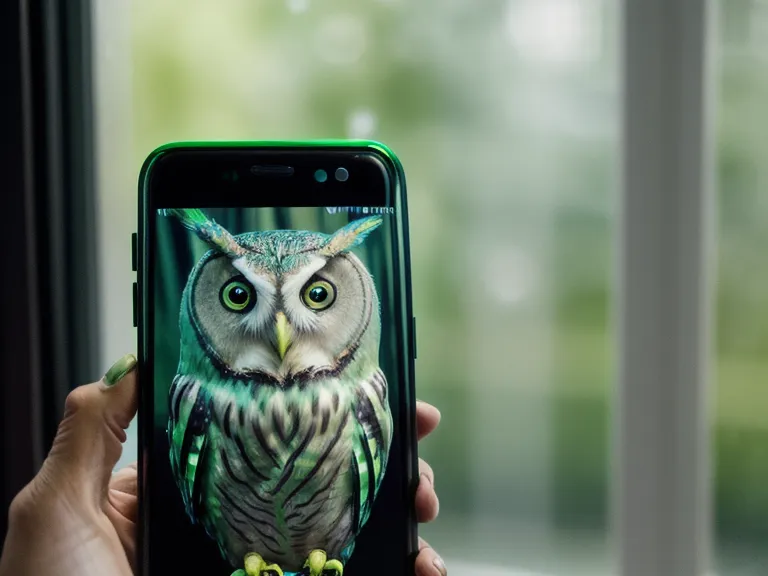
There's a specific, hollow satisfaction in reaching the top of a Duolingo league, and I've spent more hours than I'd like to admit fighting strangers in Brazil and France for a rank that has nothing to do with how well I actually speak. Streaks, leagues, and an increasingly aggressive owl are built to bring you back tomorrow, not to make you fluent tomorrow — a distinction I only really believed once I noticed my comprehension held steady during a stretch where I barely opened the app at all, badge or no badge. The problem with league rankings is that they reward passive recognition — see a word, tap the right answer, get the little chime — while treating active recall as optional. I've written before about why I stopped chasing daily badges to actually learn Italian, and the short version still holds: the forgetting curve doesn't care how many leagues you've won. Something like 70 percent of new vocabulary is gone within a day without active recall, and tapping a multiple-choice button doesn't ask your brain to retrieve anything, just recognize it.
A UX friend from a conference years back, Piotr Zamoyski, still emails me a new app recommendation every couple of months, and the follow-up email a week later is never really about the app. It's a casual mention of whatever fluency milestone he just hit, which I've come to recognize as its own kind of streak, just aimed at me instead of an owl. The habit that actually survives isn't the one with the counter ticking upward. It's whichever one you'd keep doing even after the counter resets to zero.
Spanish in an Airport Cafe

Weeks of cramming Spanish ahead of a Mexico City layover felt like real progress right up until I stood in an airport cafe and needed to explain a shellfish allergy to someone who wasn't speaking at app speed. I'd crammed the way you cram for anything with a hard deadline — travel units, food vocabulary, the phrases you assume you'll need — and that kind of deadline-driven studying turns out to teach you something different than learning with no departure date hanging over you. My brain had gotten very good at multiple choice and nothing about producing a sentence from scratch under pressure.
None of the units on ordering dinner tell you whether you're actually ready to hold up your end of a conversation with a stranger who has no patience budgeted in for a learner. That kind of conversation-readiness is a separate skill from finishing a lesson streak, and it's the one most apps quietly skip. What hit me in that cafe wasn't really a vocabulary gap so much as a specific flavor of adult-beginner anxiety, the sensation of being a competent professional who's suddenly been demoted to toddler speech, stammering through a sentence a native five-year-old could produce without thinking. I know, abstractly, that there are six CEFR proficiency levels between where I started and wherever fluent lives. In that cafe, I wasn't sure I'd cleared the first one.
Mondly, which I'd been using for the Spanish push, is good at handing you a phrase to recall and less good at teaching you to generate a new sentence when the barista goes off script. Recall and generation are different muscles, and the app mostly trains the first one. Its vocabulary drills do lean on spaced repetition, resurfacing a word right around when you're about to lose it, which is a more honest trick than a streak counter even if it doesn't solve the generation problem.
Grammar Finally Started Sticking Around Week Four

Somewhere in between the two failed methods was a low point: I tried journaling a single sentence in Italian every night before bed, the kind of habit advice that sounds bulletproof until you're staring at a blank note on day three with nothing left to say about your day that you actually know how to say in Italian. That one didn't survive the week. What did survive was Rocket Languages, mostly because it's audio-first: no text on screen to lean on, just a voice asking me to answer before I can second-guess the spelling, which forces exactly the kind of production practice a tap-the-right-answer app never asked of me. I've written up the full case for why that switch was worth it elsewhere, so I won't repeat the whole argument here, except to say that whether a subscription like that earns its keep depends entirely on whether you want conversational competence or just want to feel like you're making progress.
Around the fourth week of leaning on audio drills instead of visual ones, I woke at three in the morning with "ho dimenticato" already sitting there, fully formed and correctly conjugated, no app open and no lesson prompting it — the kind of thing that surfaces on its own, the way a childhood phone number sometimes resurfaces from nowhere. (I still can't reliably explain the difference between siamo and stiamo when someone asks me directly.) Apparently something had been assembling itself in the background the whole time, whether I was paying attention or not.
There's a whole separate angle about learning the language of a grandparent who never got around to teaching you, and Rocket Languages leans into that heritage-learner framing more deliberately than most competitors, not something I can unpack properly inside a subscription audit, but worth flagging. A reader named Anneliese, who left a long comment under that same heritage-learner piece describing her own grandmother's Sicilian dialect, emailed me afterward asking whether any of these apps actually handle accessibility well — larger text, real screen-reader support, that kind of thing — and I realized I'd never once checked.
Auditing What's Actually Worth the Subscription
Late in the review of my own bank statement is where the accounting always gets uncomfortable. A recurring charge for a Japanese course I haven't opened since sometime last fall sat there, unbothered, the whole time I was congratulating myself on the Italian progress. I still daydream about reading signs in Tokyo, about eventually getting through hiragana without sounding out each character letter by letter, but Japanese keeps losing to the fact that I'm a freelancer with actual client deadlines, and fitting a new writing system in around invoicing work is a different kind of time-constrained problem than finding ten minutes for flashcards. Kanji, from what I understand, rewards visual learners who treat each character as a small picture instead of a spelling pattern. A script-acquisition approach that has nothing in common with how I learned to read Italian, and probably explains why I keep starting and stalling.
None of this adds up to fluent, a word I avoid the way some people avoid "moist". I'd rather talk about conversation comfort, and mine is better than it was, just unevenly distributed across three languages I've never fully committed to. What's stayed on my card are the apps that make the production part unavoidable, not the ones that let me coast on recognition and call it a lesson. The ones I've cancelled are exactly the ones that let me feel like I was improving without ever really testing whether I could produce a sentence a native speaker hadn't multiple-choice-approved in advance.
If there's a rule buried in all this, it's that friction is the feature, not the bug. The app that makes you produce a sentence under a little discomfort is doing more for you than the one that only ever asks you to recognize the right answer from a lineup. I'm keeping the subscriptions that make me sweat a little and finally cancelling the ones that just want to show me an owl looking disappointed. It's slower than any app store description promises, and it's taken longer than I'd like to admit, but ordering dinner without panicking has slowly turned into something closer to an actual conversation, which was always the only subscription metric that mattered.