
I’m sitting in a crowded coffee shop on State Street here in Madison, staring at a smear of cannoli cream on my thumb, and I cannot for the life of me remember the Italian word for 'napkin'. I’ve had a four-month streak on my phone. I’ve clicked the little green owl’s face every night before bed for 120 days straight. But when the barista looks at me, my brain just offers up a static hum. It turns out that 'tovagliolo' didn’t make the cut for my long-term storage, despite all those matching games.
Before we go further, a quick heads-up: if you click through to any of the language apps I mention and end up buying a subscription, I earn a commission at no extra cost to you. I only write about tools I’ve actually paid for and used until I either loved them or added them to my subscription graveyard. I’ve logged more hours on these interfaces than I’d like to admit to my tax preparer, and the following is my honest take on what actually sticks when you're standing at a deli counter.
The Dopamine Wall and the UX of Forgetting
As a UX writer, I spend my days thinking about how to make things frictionless. Duolingo is the gold standard of frictionless. It’s so smooth it’s almost dangerous. You slide through lessons like a hot knife through butter, matching icons to words and feeling like a genius because you recognized a picture of bread. But early this year, I realized that this lack of resistance was exactly why I was failing at ordering food with confidence. I was recognizing, not recalling. There’s a massive difference between seeing a picture of a 'mela' and having to pull the word 'apple' out of the thin, cold Wisconsin air.
There was an ego-bruising moment back in mid-July when I realized I’d spent over $100 on annual subscriptions for apps I only open when a push notification guilt-trips me into it. I had the streaks, but I didn’t have the language. I could SURVIVE in an airport, sure, but I couldn't hold a conversation about anything more complex than the location of the library. I needed more cognitive friction—the kind that forces your brain to actually build a shelf for a new word rather than just letting it bounce off the screen.
Why 'Eating My Vegetables' in Mondly Felt Different
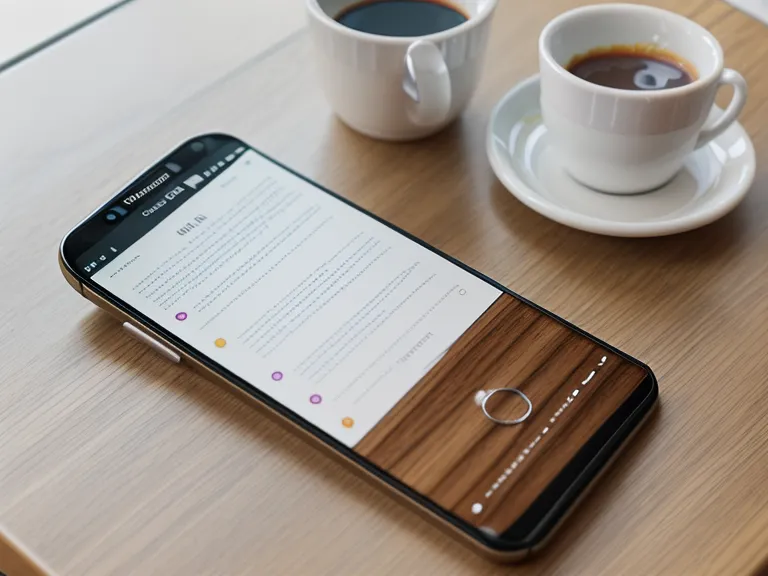
One freezing morning last January, I finally opened Mondly by Pearson. I’d been paying for it for months (classic me), but I’d ignored it because it felt a bit more mechanical—a bit more like 'eating my vegetables'. While Duolingo feels like a game, Mondly feels like a trainer. It doesn't give you as many cute animations, but it pushes you into translation-heavy drills that are significantly harder to 'game'.
Mondly offers 41 languages, which is impressive for a platform that isn't just a basic flashcard deck. I started with their Italian daily lessons, and the shift was immediate. Instead of just tapping 'pane' when I saw a loaf of bread, Mondly often required me to type or speak the phrase in a full sentence context. It wasn't as 'fun', but my brain started to sweat a little. That sweat is where the memory lives. It’s the difference between watching a workout video and actually picking up the kettlebell.
I also appreciated that the lessons are built for habit stacking. I started doing my Mondly daily lesson with my morning coffee, treating it as a non-negotiable part of my freelance routine—right between checking my invoices and ignoring LinkedIn. If I wanted something even more structured for professional reasons, I might have looked into EF English Live, which is mapped to 16 CEFR levels and offers group classes every 30 minutes, but for my Italian 'food-and-daydreaming' goals, Mondly’s grit was what I needed.
The Physics of Memory: AR and Spatial Triggers
One of the weirder, more effective things about Mondly is the AR mode. About three weeks ago, I spent a rainy Tuesday afternoon in my living room 'placing' Italian nouns on my furniture. There is something fundamentally different about seeing the word 'tavolo' projected onto your actual coffee table versus seeing it on a white background on a 6-inch screen. This taps into the Method of Loci, a spatial memory technique that’s been around since ancient Rome.
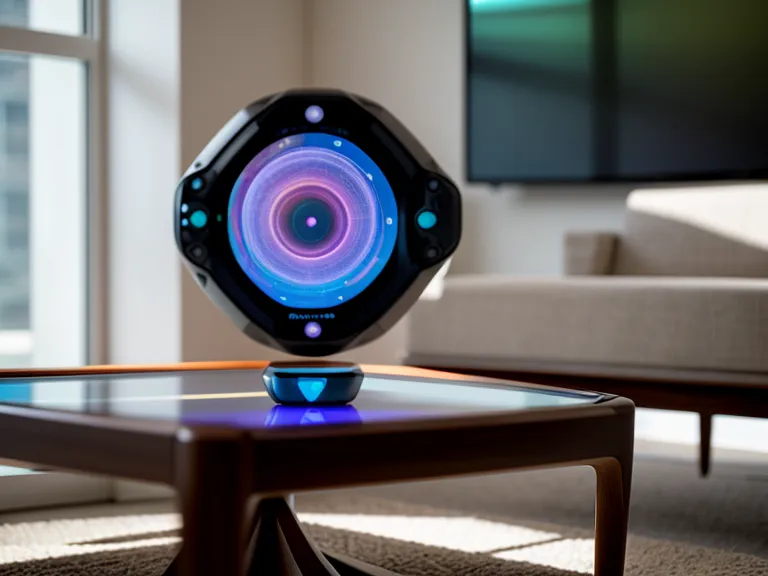
By physically walking around my apartment and interacting with virtual objects, I was creating 'hooks' for the vocabulary. I still remember exactly where the virtual cat was sitting on my rug when I learned the word 'gatto'. Duolingo doesn't have a way to tether words to my physical reality. It exists in its own bright, cartoonish vacuum. Mondly, despite its occasionally glitchy voice recognition, felt like it was trying to live in my world.
Speaking of voice recognition: it’s the one area where I’ve experienced the most frustration. There is a specific kind of internal rage that comes from the sharp, rhythmic tapping of my fingernails on my phone screen in a quiet library while the app refuses to acknowledge my pronunciation of 'chiacchierare' (to chat). I said it three times. I know I said it right. My grandmother would have understood me. But the app just sat there, judging my vowels. It’s the one time I missed the Pimsleur narrator; he’s like a polite houseguest who just waits for you to finish, even if you’re struggling.
Cognitive Friction: The UX Writer’s Verdict
The core of my comparison comes down to a concept we talk about in design: cognitive friction. Duolingo is designed to keep you in the app. It wants you to keep clicking, keep watching ads, and keep your streak alive so you feel good. But that 'feel good' is often a mask for shallow learning. By making the path too easy, they prevent the deep encoding necessary for long-term retention. You aren't learning the language; you're learning how to play the Duolingo UI.
Mondly, on the other hand, is clunkier. The translation drills feel repetitive. The interface isn't as 'bubbly'. But that clunkiness forces you to work. When I have to translate 'I would like a glass of red wine' (Vorrei un bicchiere di vino rosso) without a bank of word bubbles to choose from, I have to actually *know* the words. If you find the subscription model exhausting and want a more 'buy it once and own it' approach to this kind of rigour, Rocket Languages is a solid alternative with a 60-day refund window, though its UI feels like it hasn't been updated since I was in college.
Final Tally: Which Vocab Actually Stuck?
After months of bouncing between the two, the results are in my notebooks. When I look at my hand-written verb conjugations from early spring, the words I remember without checking are almost all from my Mondly sessions or my brief stint with Rocket. The Duolingo words? They’re the ones I still 'sort of' recognize but can't produce when the pressure is on.
I’ve realized that I don't care about the badges or the leagues anymore. I care about the moment at the deli counter when I can say 'Senza cipolla, per favore' without looking like I’m having a minor existential crisis. Mondly’s mechanical repetition and spatial AR drills gave me the 'ordering food without panicking' level of comfort I’ve been chasing since 2019. It’s not the most glamorous app, and it won't make you 'fluent' (a word I avoid like the plague), but it will make the words stick to the ribs of your brain.
If you're tired of the owl's empty promises and want to actually build a vocabulary that survives a trip to Italy, I’d suggest giving Mondly by Pearson a real, dedicated month. It might feel like eating your vegetables at first, but you'll be surprised at how much better you feel when you finally find the words you need.