
My Italian can read the specials board at a deli out loud without one glance at my phone; my Spanish, until recently, couldn't find a bathroom or a price tag. That gap is the whole reason I went hunting for a Spanish phrases app I'd actually keep open, and after seven years of starting and quitting language-learning apps, Mondly is the one I'd point a fellow traveler to — not because it makes you sound local, but because it drills the ready-made phrases you need to survive a trip.
Quick disclosure: a few of the app links here are affiliate links, so if you subscribe through one, I earn a commission at no extra cost to you. I only write up apps I've actually paid for and used long enough to have a real opinion — including the ones I cancelled because the interface annoyed me or I just stopped showing up.
Why phrases, not another grammar tree?
Seven years of this — opening an app in January, ghosting it by March — leaves you with a graveyard of half-finished trees. I started on Duolingo somewhere around 2019, figuring I'd finally honor my grandmother's Italian, and I did reach an 'ordering food without panicking' level there (though I still cannot keep siamo and stiamo straight, all these years in). Spanish was always the one that got away. I even registered for a community college Italian 101 class once and dropped it after two weeks of seven-o'clock commutes — turns out a standing evening appointment is exactly the thing my schedule eats first. When I gave Mondly by Pearson a real shot, I wanted something that bridged knowing words and surviving a taco stand in Mexico.
What sets Mondly apart from the translation-heavy apps I'd cycled through since college is the unit of work. Most apps treat grammar like eating my vegetables — something to choke down before the real meal — and you wind up great at 'the apple is red' and useless at 'where's the nearest pharmacy?' Mondly builds around phrases you snap together, which is the half of the language I actually needed. It covers 41 languages on one subscription, which is a genuinely silly amount, though I was only ever there for the Spanish. If you want the full head-to-head with the big green owl, I went deeper in Mondly vs Duolingo for Busy Professionals Who Want Real Fluency.
Testing the AR mode I expected to hate
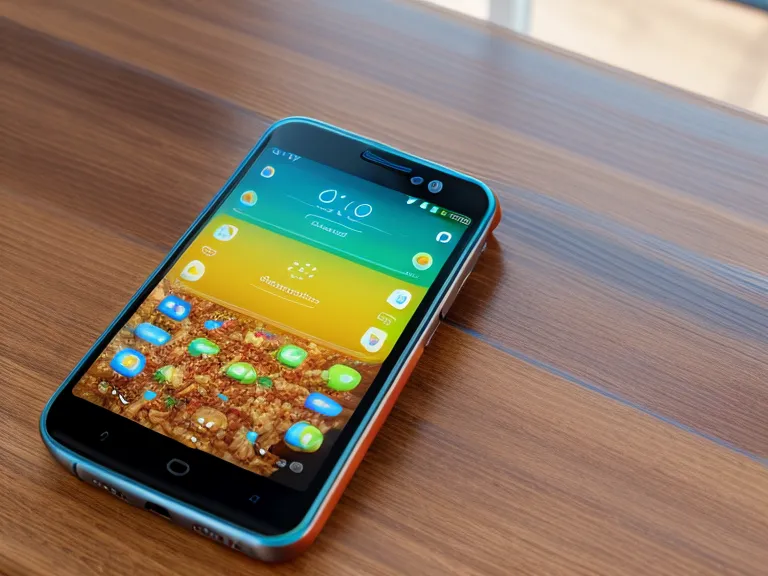
Skepticism is my reflex with any 'high-tech' feature in a language app. Usually it's a gimmick stapled on to justify a bigger number on the invoice. Mondly's AR mode leans on something real, though: spatial-memory tricks like the method of loci, where you anchor what you're learning to physical places. The app lets you drop a virtual teacher and a scatter of objects into the room through your camera.
Pointing the phone around the apartment to 'find' a Spanish-speaking avatar felt ridiculous, and the voice recognition was its usual hit-or-miss self. It once refused to accept my 'restaurante' three times running, for no reason I could see. Even so, physically moving to tag 'la mesa' onto an actual table made the word stick in a way tapping glass never did. The repetition system underneath it is the real engine, and I dug into those vocabulary features in How to Use Mondly for Vocabulary Building in a New Language.
Mondly's case for Spanish phrases before a trip
A few weeks out from the trip, the familiar pre-travel panic set in, and I did my usual thing — start shopping for the one app that'll magically make me conversational. I poked at EF English Live before remembering it's built for English learners, mapped across 16 CEFR levels; useful, but no help to my Spanish. Rocket Languages tempted me more, since its audio-first lessons fit dead time and it backs everything with a 60-day money-back guarantee — a real mercy for someone with my commitment record. I weighed the two in Why Rocket Languages Spanish Works Better for Conversation Practice, because they solve different problems.
Speed is why Mondly stayed the main tool, though. My freelance days are a pileup of client deadlines and surprise meetings, and its daily lessons are built for the five-minutes-between-emails life — I'd knock out 'Travel and Transportation' while a big PDF exported, or run one on a bench at Olbrich Botanical Gardens on a Saturday. The streak counter is a little manipulative, but I care more about the habit it builds than the number it's protecting. Around the sixth week, the basics started arriving on their own — I caught myself reaching for '¿cuánto cuesta?' before I'd had to dig for it, which is more than the earlier apps ever gave me. My neighbor Deb, who has watched me start more of these than either of us can count, just asked whether I could actually hold a conversation yet or only order lunch. A fair question, and the honest answer was lunch.
The taco stand is where phrase-matching met a real human
The taco stand in Oaxaca is where the wheels came off. Mondly had handed me hundreds of phrases through its matching drills and I felt prepared — right until the vendor asked something off-script about which salsa I wanted. In the three-second silence, my brain didn't serve up Spanish at all; it reached for my grandmother's Italian and produced a reflexive 'scusa,' which is not the word a hungry person should be reaching for. I regrouped, pointed, and got out 'sin cilantro, por favor' — which did finally land clean, and which I'd absolutely drilled in the app.
Mondly is a superb library and a weak rehearsal partner, and that's the catch. You get very good at the game of the app — match the Spanish to the English — but that skill can collapse the second a real person skips the script and there's no 'check answer' button. Nnamdi, a guy I know from an old Duolingo league who somehow juggles four languages at once without breaking a sweat, would tell me this is true of every app and a substitute for none of them. The phrases were all there; the connective tissue of an unscripted reply was still under construction.
My verdict after seven years of cancelled subscriptions
Despite the 'scusa' incident, Mondly is still the app I'd hand a casual traveler who wants Spanish phrases and nothing loftier. The reason is embarrassingly simple: I kept using it. Most apps get purged on the cancel-everything afternoon I run once a quarter, and Mondly has survived the last several cuts — the Pearson-backed structure and the habit loop are just well-built. It won't replace the deep audio immersion of something like Rocket Languages, but for surviving an airport, a market, or a deli counter, it's the lowest-friction path I've found.
Here's the rule the taco stand actually taught me, and the one I'd pass on: before a trip, judge a phrase app by whether it ever makes you answer an unscripted follow-up, not just feed back the line it just taught you. If every exercise only asks you to match the sentence, treat the app as vocabulary scaffolding and spend your last week rehearsing the reply out loud — to a patient friend, to the mirror, to anyone who won't hand you the answer. Mondly got me the library; the rehearsal was on me, and that's the part no streak counter can do for you.

If you want to start building your own phrase library without the usual app-fatigue, you can check out Mondly by Pearson here. It won't make you a local overnight, but it'll get you to the bathroom and a decent cup of coffee — which, let's be real, is most of the battle when you're a long way from home.